Free shipping offers on selected ritual-ready pieces.
Practical cleaning and storage advice for stainless steel jewelry and natural agate beads. Start with the material and finish listed on your product, then choose a gentle care routine.
Everyday care: Put jewelry on after cosmetics have dried, take it off before swimming or household cleaning, and store each piece separately.
Let fragrance, lotion and other cosmetics dry before putting on rings or necklaces. Avoid spraying products directly onto colored finishes.
Remove jewelry before swimming, heavy work or activities that put pressure on the piece. Water resistance of a steel base does not establish the durability of its finish, clasp or other parts.
Steel jewelry and agate beads need different handling. Check the individual listing for coatings, components and any treatment information.

Start with a soft, lint-free cloth. For an all-steel piece, a damp cloth and a little mild soap may be suitable; remove residue carefully and dry fully. Avoid soaking pieces with unknown coatings or attached components.
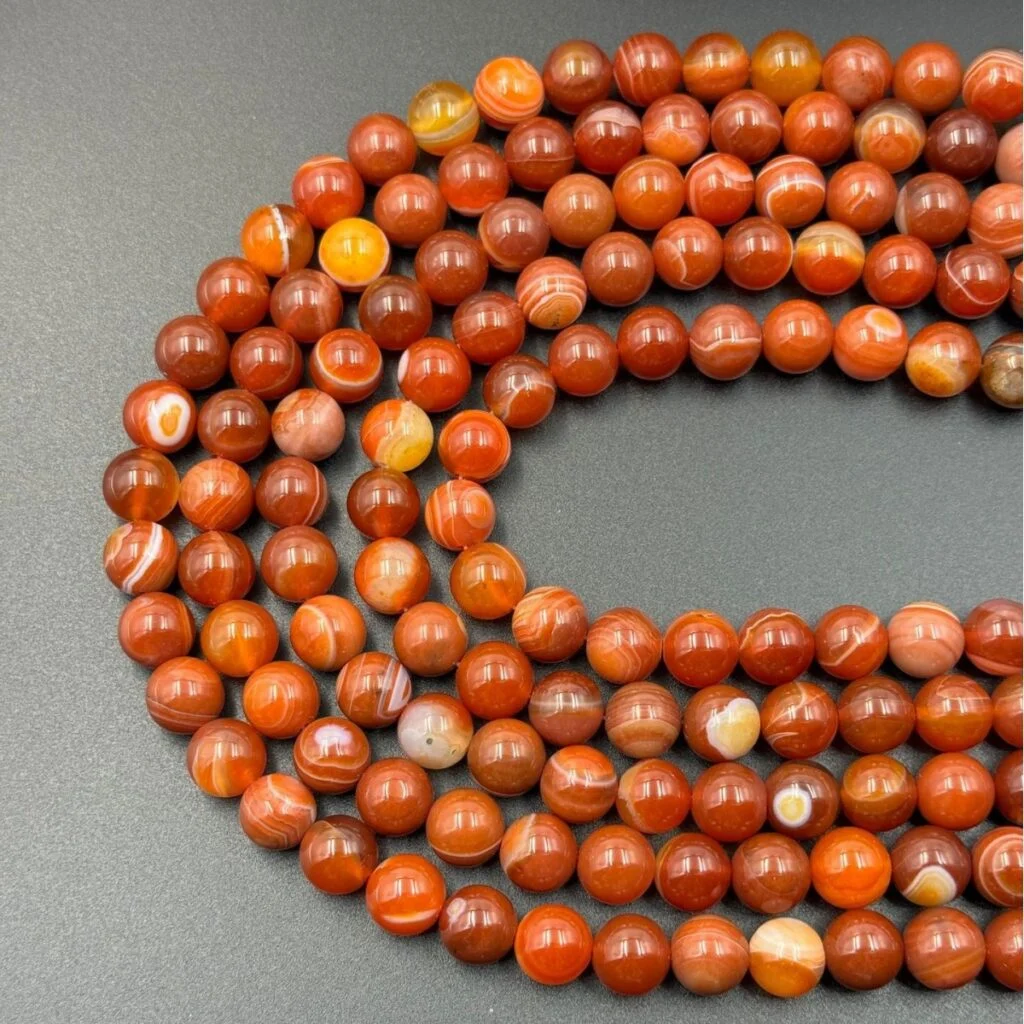
Use a soft cloth and gentle pressure on polished agate. If a damp cloth is needed, dry the beads fully. Because treatment status varies by listing, do not assume steam, solvents or ultrasonic cleaning are suitable.
Gold-tone, silver-tone and black describe appearance, not precious-metal content. The steel base and the colored surface can wear differently. Avoid abrasive polishing and harsh chemical cleaners on finishes.
Loose bead strands are jewelry-making supplies, not finished necklaces. Support the whole strand when moving it; do not pull a bead against its temporary thread. Store strands by shape and size.
Begin with the least intensive method below. If the finish or treatment is unclear, ask us about the specific product before trying a new cleaning method.
Use a clean, soft cloth to remove light fingerprints and residue from steel surfaces and polished beads.
When dry wiping is not enough, use a barely damp cloth. Avoid soaking temporary bead threads or unknown finishes.
A little mild soap may be suitable for an all-steel piece. Check the components first and remove all residue.
Do not use abrasive pads or household chemicals. When treatment or finish is unknown, avoid steam and ultrasonic cleaning.
Keep rings, necklaces and beads in separate compartments or soft pouches. Let damp pieces dry fully before storage. Close necklace clasps and lay chains out to limit tangles.
Agate may vary in banding, translucency and color depth. Natural variation does not establish whether a bead has been dyed or treated. Chips, sharp damage or an incorrect order should be reported to us.
See our returns guidance or contact us with photographs.
We recommend removing it first. A stainless steel base does not make every colored finish, clasp or attached component suitable for prolonged water exposure.
Start with a soft cloth. For an all-steel piece, use a little mild soap and a damp cloth if needed, remove residue, then dry fully. Check coatings and other components before deeper cleaning.
Avoid it when the treatment status is unknown. Different treatments and components may require different cleaning methods. Ask us about the specific strand before using heat, steam or an ultrasonic machine.
Banding, translucency and color depth vary between beads. Treatment information is separate from natural variation. Contact us with photographs if an item appears damaged or incorrect.
Keep them dry in separate, labeled compartments. Support the whole strand and avoid pulling against its temporary thread. Bead strands are materials for making jewelry, not finished necklaces.
Contact us with the product name or link. We can check the information available for that piece; do not infer steel grade, coating type or treatment status from a photograph.
General reference: GIA jewelry care guidance. Product-specific instructions and treatment information take priority.
Questions about a piece, fit or your order? Email Alorvia Studio or send us a message.
